Empowering Your Journey to Recovery
Becky Stone is a BACP-registered therapist in Canterbury who specialises in eating disorders, anxiety, and self-worth. In this article, she explains why the feeling of never being good enough isn’t always about low confidence, for some people, including Becky herself, it traces back to undiagnosed ADHD or dyslexia and the masking habits children develop to cope with feeling different
Personalized Support
No two people mask the same way, or carry ‘not good enough’ in the same place. Support here starts with understanding your actual story, not fitting you into a programme built for someone else.
Innovative Tools
Alongside our sessions, tools like the Recovery Record app help you notice the pattern as it’s happening, not just talk about it afterwards, the same ‘experiment, not exam’ approach that runs through everything we do together.

Therapeutic Approach
Why "never good enough" isn't always about confidence.
There’s a particular kind of tired that comes from doing something well and still not being able to enjoy it. You finish the project, you get through the interview, you have the good day with your kids, and somewhere underneath, a voice is already onto the next thing you should have done better. If that sounds familiar, I want to tell you something I don’t say publicly very often: I know this feeling from the inside, not just from the therapy room.
For a long time, I thought it was a confidence problem. It isn’t always. Sometimes “never good enough” isn’t about self-esteem at all. Sometimes it’s the leftover shape of a mind that was never fully understood, including, for a long time, by the person living in
Sometimes the struggle isn't about ability it's about trying to thrive in an environment that was never built for how your mind works.
When the problem isn't you, it's the fit
Children rarely choose coping strategies consciously—they simply find the safest way to survive emotionally.
WHY NOTHING EVER FEELS GOOD ENOUGH
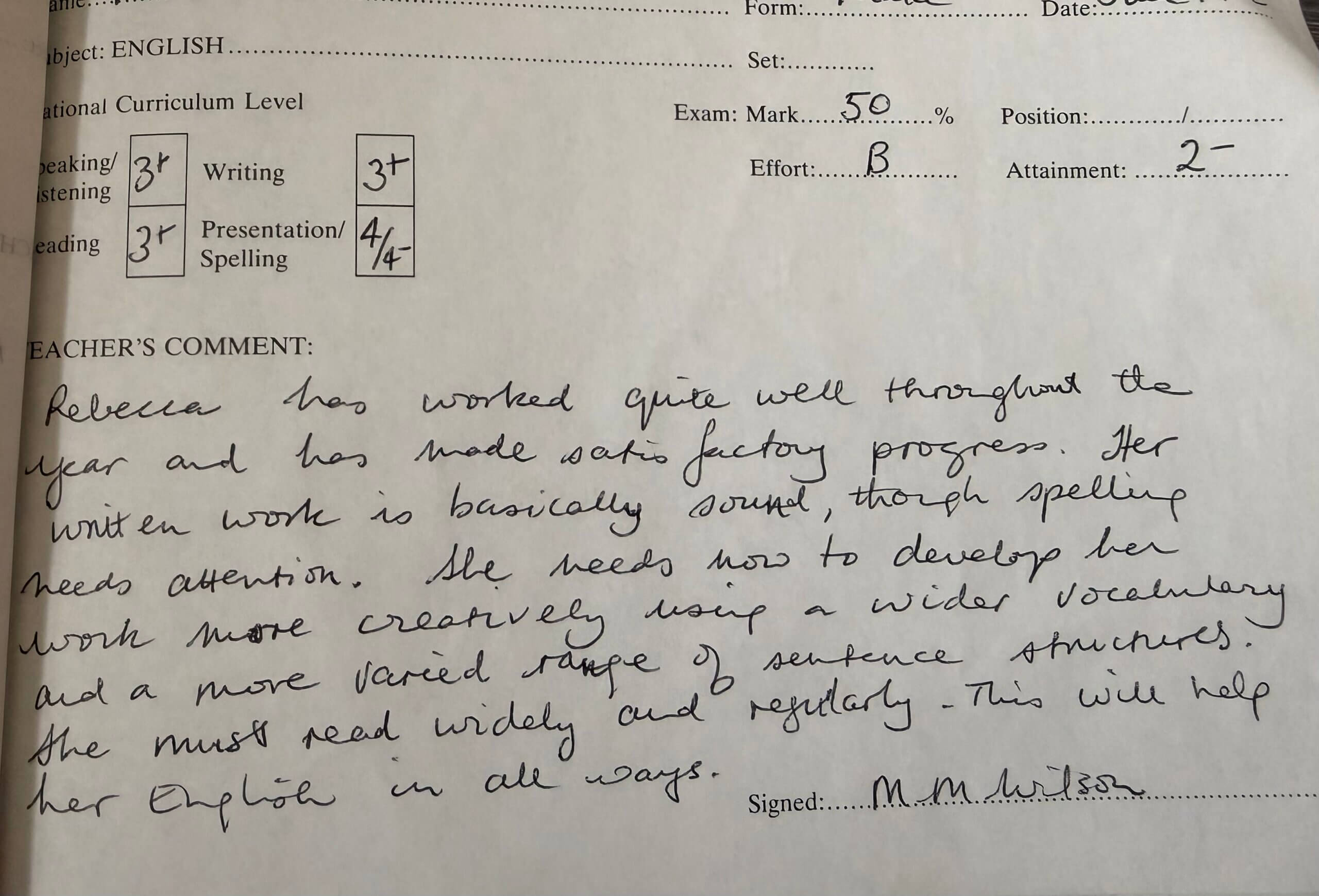
I grew up undiagnosed, with ADHD and dyslexia, though nobody had those words for me at the time. What I had instead was a sense, from about the age of seven, that I was different in a way I couldn’t explain and couldn’t fix. I wanted to learn. I wanted to do well. It was more like being a Ferrari with the handbrake on: all that want, and no straightforward way to get it moving in the direction everyone else seemed to manage without thinking about it.
I remember being sent to sit apart from the class around that age, because the pace I needed didn’t match the pace the room was going at. Nobody was unkind about it, particularly. There just wasn’t a name yet for what was actually going on, so the only name I had for it was the one children reach for by default: something’s wrong with me.
That’s the bit I want to slow down on, because I think it’s more common than people admit. A lot of “never good enough” doesn’t start with a single dramatic event. It starts with a mismatch between how your brain works and what the room around you expects, that gets quietly translated into a verdict about your worth, because a child doesn’t have any other framework to make sense of it with.
You don’t need a diagnosis for any of this to feel familiar, by the way. ADHD and dyslexia happen to be my particular version of it. The mismatch itself, the sense of never quite matching what was expected of you, and quietly deciding that means something about your worth, is a far more common experience than the specific reasons behind it.
Understanding yourself can replace years of shame with clarity, compassion and self-acceptance.
The different ways children learn to cope
By the time I was seven, I’d already worked out a strategy without anyone teaching me: overtalk. Fill the silence so nobody notices what you’re struggling with; be so busy being heard that nobody has time to notice what’s underneath it.
I see other versions of the same thing play out in other people, and it’s worth naming them, because the shame underneath tends to be identical even when the behaviour looks nothing alike. There’s the child who goes the opposite way to me and disappears almost entirely, quiet, no trouble, never any fuss, because trouble draws attention and attention is where the struggling might get noticed.
And there’s the child who gets labelled “naughty,” who acts out or plays the class clown, often doing exactly the same thing under different packaging: if you’re going to get noticed for something, better it’s for being cheeky than for being slow or stupid, better a telling-off for messing about than the quieter humiliation of not keeping up.
I still see all of these, fully grown, sitting across from me in sessions, someone who fills every gap in conversation, someone who’s become so good at not being noticed that even they’ve stopped noticing themselves, someone whose “difficult” reputation was never really about being difficult at all.
None of these are personality flaws. They’re solutions a child came up with under pressure, usually years before anyone had a proper name for what they were actually dealing with, and they worked well enough that nobody ever needed to build a better one.
Therapeutic Approach
Try it as an experiment, not an exam
This is the actual shift I work through with clients, and it’s the one thing in this article I’d want you to remember if nothing else lands. An exam has a pass mark. An experiment just has a result, and every result teaches you something. Apply for the job as an experiment. Have the hard conversation as an experiment.
UNDERSTANDING SELF-WORTH
Four questions to ask instead of "did I succeed"
Ask yourself four questions rather than one verdict: What worked? What didn’t? What was the best part of it? What wouldn’t you do again?
None of those questions ask “did I succeed.” All of them assume you learned something regardless of the outcome, which is, quietly, the opposite of the “never good enough” belief. It’s the belief that says trying and learning is the actual point, not just the winning.
Supporting Neurodivergent Clients
What have you got to lose?
I ask clients something else too, which sounds almost too simple to work: what have you got to lose? And then, because it’s the question that tends to cut through the noise, what do you want to be looking back on as an eighty-year-old? A bucket of regrets, or a bucket of at least-I-tried?
Most people already know which bucket they’d rather have.
What tells me this actually works isn’t the theory, it’s what clients say afterwards. More than once, after someone’s gone and done the frightening thing, the interview, the conversation, the application, they’ve told me it felt like I was on their shoulder while they did it. Not that they remembered a session, or a piece of advice I’d given them, but that some steadier version of the process had come along with them. That’s usually the point where the belief starts to actually shift, rather than just being understood.
A boundary I'm proud of
I’ll tell you one more thing about my own life, because it’s the moment that changed how I think about all of this. This was after the diagnosis, and I don’t think I could have done what I’m about to describe without it. Having an answer finally gave me the courage to put a boundary in, where before I’d have just absorbed it. I was in a work situation where someone didn’t understand how my brain worked and was setting a task up in a way that was never going to go well for me. The old version of me would have masked it, overtalked or gone quiet and just struggled through, ashamed. Instead, I put my hand up and said, plainly, this isn’t going to work for me the way it’s set up, and I need it done differently.
What I understood afterwards, and wish I’d understood years earlier, is that it was never really about me. It was his lack of understanding, and quite possibly his own version of not feeling good enough, aimed at someone he’d decided was the problem instead. That’s true more often than people realise, the person making you feel small is frequently carrying the exact same feeling themselves, just pointed outward instead of in.
I remember feeling proud, not ashamed. That’s the whole arc, really: the same person who once sat apart from the class not understanding why, finally being listened to, because she did the listening herself, with an answer to back her up.
Finally, an answer
Understanding yourself can replace years of shame with clarity, compassion and self-acceptance.
I didn’t get the word “dyslexic” until I was thirty-six. Not a suspicion I’d been carrying quietly; I genuinely didn’t know, for three decades. When the answer finally came, it didn’t land like confirmation that something was wrong with me. It landed the other way round. The thing I’d spent thirty years being quietly ashamed of finally had a name that wasn’t “not good enough” , and once it had a name, I could see it properly for the first time: not a flaw I had to keep managing and hiding, but genuinely one of the things that makes me who I am. Understanding it didn’t undo the years of masking overnight. But shame needs a mystery to survive on, and for the first time, I had an answer instead.
The pattern I see over and over
Here’s what I’ve learned to look for with almost everyone who sits across from me, whatever they’ve actually come in saying: the presenting problem is rarely the real problem.
Someone might arrive describing themselves as anxious, or struggling in a relationship, or “just a worrier”, and underneath it is often the same thing: a mask of behaviour built years earlier to survive not feeling good enough. Sometimes that root sits in childhood, like mine did. Sometimes it’s the teenage years, sometimes it’s a friendship that fell apart in a way nobody ever properly explained. There isn’t one single origin story, and there doesn’t need to be. What matters is helping someone feel properly heard in the pattern of belief they’ve been carrying, often for years, before anything can start to shift.
Here’s what I notice most, across clients who’ve never met each other and have completely different histories: the fear of not being good enough usually doesn’t get resolved by avoiding the risk. It gets confirmed by it. If you never put yourself forward for the job, you never fail at the interview, but you also never find out you might have got it, and the belief that you weren’t good enough for it stays exactly where it was, untested and therefore unchallengeable.
The way out isn’t forcing yourself to feel confident before you act. It’s smaller and stranger than that: treat the scary thing as an experiment instead of an exam.
Try it as an experiment, not an exam
This is the actual shift I work through with clients, and it’s the one thing in this article I’d want you to remember if nothing else lands. An exam has a pass mark. An experiment just has a result, and every result teaches you something. Apply for the job as an experiment. Have the hard conversation as an experiment.
Four questions to ask instead of "did I succeed"
Ask yourself four questions rather than one verdict: What worked? What didn’t? What was the best part of it? What wouldn’t you do again?
None of those questions ask “did I succeed.” All of them assume you learned something regardless of the outcome, which is, quietly, the opposite of the “never good enough” belief. It’s the belief that says trying and learning is the actual point, not just the winning.
What have you got to lose?
I ask clients something else too, which sounds almost too simple to work: what have you got to lose? And then, because it’s the question that tends to cut through the noise, what do you want to be looking back on as an eighty-year-old? A bucket of regrets, or a bucket of at least-I-tried?
Most people already know which bucket they’d rather have.
What tells me this actually works isn’t the theory; it’s what clients say afterwards. More than once, after someone’s gone and done the frightening thing, the interview, the conversation, the application, they’ve told me it felt like I was on their shoulder while they did it. Not that they remembered a session, or a piece of advice I’d given them, but that some steadier version of the process had come along with them. That’s usually the point where the belief starts to actually shift, rather than just being understood.
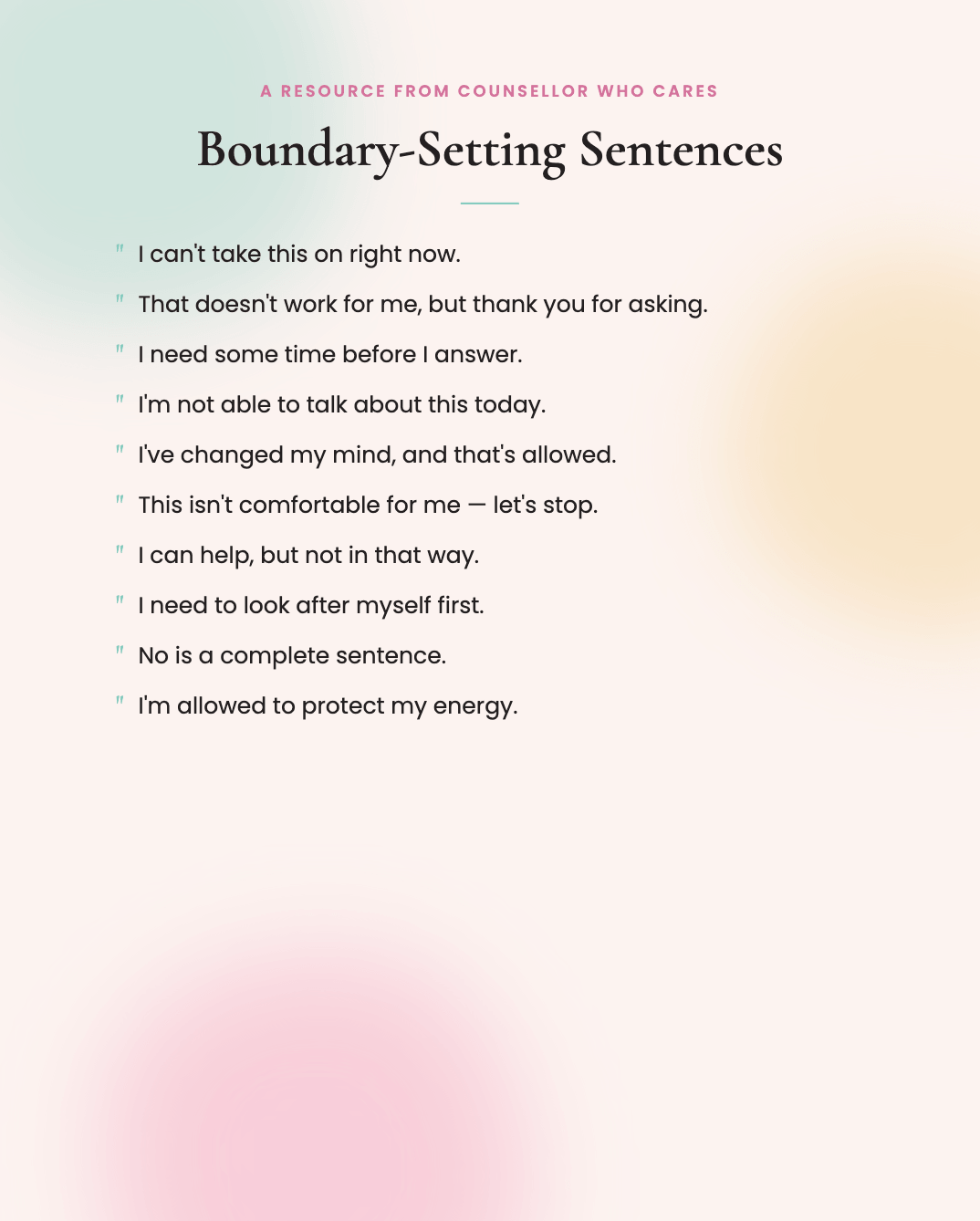
Real confidence often begins with understanding your needs and feeling able to speak up for them.
A Boundary I'm Proud Of
I’ll tell you one more thing about my own life, because it’s the moment that changed how I think about all of this. This was after the diagnosis, and I don’t think I could have done what I’m about to describe without it, having an answer finally gave me the courage to put a boundary in, where before I’d have just absorbed it. I was in a work situation where someone didn’t understand how my brain worked and was setting a task up in a way that was never going to go well for me. The old version of me would have masked it, overtalked or gone quiet and just struggled through, ashamed. Instead, I put my hand up and said, plainly, this isn’t going to work for me the way it’s set up, and I need it done differently.
What I understood afterwards, and wish I’d understood years earlier, is that it was never really about me. It was his lack of understanding, and quite possibly his own version of not feeling good enough, aimed at someone he’d decided was the problem instead. That’s true more often than people realise; the person making you feel small is frequently carrying the exact same feeling themselves, just pointed outward instead of in.
I remember feeling proud, not ashamed. That’s the whole arc, really: the same person who once sat apart from the class not understanding why, finally being listened to, because she did the listening herself, with an answer to back her up.

I sometimes picture her, little Becky, and ask her what she needs from me right now. It’s not a technique I invented for a blog post; it’s genuinely something I do, and something I ask clients to try with their own younger selves. The answer is usually simple. You don’t have to be perfect. You don’t have to be what the system wanted you to be. You have a brain that works differently, not a brain that’s broken, and there’s nothing about being different that means you won’t be good enough when you’re older.
If you take one thing from this, take that. You don’t have to get it right. You are good enough, exactly as you are.

Becky Stone
I’m Becky Stone, a BACP-registered therapist based in Canterbury, Kent. I specialise in eating disorders, disordered eating, body image, anxiety and emotional wellbeing, working with both adults and young people. My approach is trauma-informed and integrative, therapeutic depth alongside practical, coaching-style tools, shaped as much by my own lived experience of recovery, undiagnosed ADHD and dyslexia, as by my training. Counsellor Who Cares was built around one belief: real change happens through genuine relationship, not just technique.
“Real change happens through genuine relationships, not just technique.”
Start Your Journey to Recovery
Are you ready to take the first step towards a healthier relationship with food and yourself? Schedule a consultation today to explore how we can support your recovery journey. Reach out now and let’s work together to create a path forward that feels right for you.
Phone
Reach out to me at (07510) 495791 for a chat about how we can work together.
beckywhocares1@outlook.com – I’m here to listen and help.
Address
Based in Canterbury, Kent, I offer compassionate support tailored to your needs.