If You Need Help Right Now Counsellor Who Cares
I’m Becky Stone, an MBACP counsellor and qualified clinical supervisor based in Canterbury, Kent, specialising in eating disorder recovery for adults, children and teenagers. I offer trauma-informed, weight-inclusive therapy online across the UK and in person locally, with particular experience supporting people with anorexia, bulimia, binge eating disorder, orthorexia, including those who are neurodivergent. I bring both lived experience and clinical training to this work, which means I understand eating disorders from the inside as well as the outside.
If You Need Help Right Now
First thank you for trusting me enough to be here.
If you’re reading this, something doesn’t feel right. You might be exhausted, overwhelmed, not sleeping, not eating just trying to hold it together in the middle of what feels like absolute despair. That matters. You matter. And the fact that you’ve even opened this page is already something.
You don’t have to have all the words. You don’t have to know exactly what you need. You just have to be here , and you are.
Step 1
Right now, in this moment
If you’re in a crisis right now, here are the first things I’d want you to do the same things I’d say to any client who reached out to me in this moment:
Try to have something small to eat if you can, even a few crackers or a biscuit. When your blood sugars drop, everything feels harder. Your brain needs fuel to think.
Step 2
Step Two
Sip some water
Step 3
Step Three
Look around: who is nearby who feels safe and trustworthy? You don’t have to explain everything. Just don’t be alone right now if you can help it.
Step 4
Step Four
If you need urgent medical help, call your GP and ask for an emergency appointment. If it can’t wait, call 111. If it is a real emergency, call 999.
If it's the middle of the night and nothing feels manageable
Navigating the Storm: Understanding Your Brain's Response to Stress
Your brain is doing exactly what it is designed to do under threat. When we’re in a state of fight or flight, our nervous system floods with stress hormones, cortisol, adrenaline, and the thinking, reasoning part of the brain goes quiet. This isn’t weakness. This is biology. It means you are human, not broken.
It also means that trying to think your way out of this right now probably won’t work, and that’s okay. Instead, try to give your nervous system something to settle around:
- Put some music on, something familiar, something that doesn’t ask anything of you.
- Get some fresh air if you can, even just opening a window.
- Make yourself a warm drink, a mug of warm milk is genuinely soothing for the nervous system.
- Find a blanket, a hoodie, something that feels physically comforting.
- Put something on in the background, something nostalgic, something you’ve seen before and don’t have to follow. It just needs to fill the silence.
- If words feel impossible, try writing it down instead, even just a list, or a mind map of what’s swirling around. Getting it out of your head and onto paper can create a little distance.
Ask yourself: what usually keeps me grounded? What has helped before? What keeps hope going, even slightly? You don’t need a big answer. Just one small thing.
If nothing on this page is going in right now
That’s okay. Sometimes when we’re in fight or flight, nothing goes in, and that’s not a failure; that’s your brain protecting you. Save this page and come back to it when you’re feeling calmer and more regulated. You’ll be able to read it differently then. And when you do, you only need to take one thing from it, the one sentence or the one number that feels most relevant to you right now. Just one.
What if you're not sure you're ill enough to need help?
What if you're not sure you're ill enough to need help?
You are important enough to be heard and to be seen. The fact that you’ve reached out at all tells you something isn’t right, and that’s enough. You don’t need to compare your suffering to anyone else’s. Everybody has their own world, their own struggles. Yours are not less serious because someone else’s look different.
It is always better to reach out where you are right now than to wait until things get worse.
You Haven't Failed
You Haven't Gone Too Far
The Fears That Might Be Stopping You
A note on physical health, please don't wait
Eating disorders can become medically serious more quickly than many people, including many GPs, realise, even when someone doesn’t look unwell. If you are purging, restricting severely, using laxatives, or are worried about your physical state, please contact your GP or NHS 111 for a physical health check. You do not need to wait until you look ill. Please don’t.
Crisis Contacts
If You Are in Immediate Danger
999
A&E
Emergency Services
Mental Health Crisis — Kent and Medway
Release the Pressure 0800 107 0160
Mental Health Direct 0800 995 1000
NHS 111
If This Is About an Eating Disorder
Beat Helpline (England) 0808 801 0677
Beat Helpline (Scotland) 0808 801 0432
Beat Helpline (Wales) 0808 801 0433
If You Need to Talk to Someone
Samaritans 116 123
Shout Text 85258
Childline (Under 19) 0800 1111
Understanding Crisis Support
You haven't failed. You haven't gone too far.
You’re human. And you don’t have to get this perfect.
Reaching out, to a helpline, to a crisis team, to 999, is not dramatic. It is not a wasting of anyone’s time. It is trusting yourself that you know something isn’t right and asking the right people to help keep you safe. That is exactly what those services are there for. That is exactly what courage looks like.
Most people who don’t reach out are afraid of one of three things:
- That they won’t be believed.
- That reaching out will lead to being hospitalised against their will.
- That showing this level of vulnerability is shameful.
I want to speak directly to each of those. You will be listened to. Reaching out for support very rarely leads to hospitalisation . Crisis teams and helplines are there to support you in staying safe at home wherever possible. And being vulnerable? That is not weakness. It takes more courage than most people will ever know to say “I’m not okay.” There is real strength in that.
We are taught by society to hold it all in, to keep going, to not burden anyone. But asking for help is not a burden. It is one of the bravest things a person can do.
The fears that might be stopping you
What I offer, and how it's different
I’m not the crisis team, and I want to be honest about that, because it matters.
My sessions are booked in advance, planned and structured. If you look at my booking system and the next appointment is a week away, that is not a sign that I’m unavailable or that your needs don’t matter; that gap is part of how therapy works. It is scheduled, it is consistent, and it is about finding stability and moving forward one session at a time.
Crisis support is different, it’s immediate, it’s there in the moment, and it works within its own resources and processes to keep you safe right now. Both matter. Both have their place. And both can be part of your care at the same time.
You are important. You are valued. And there is hope.
Recovery and even just getting through today doesn’t have to happen all at once. You don’t have to fix everything. You just have to do 1%.
1% might look like:
- Reading this page.
- Saving it to come back to later.
- Making one phone call.
- Booking one appointment.
- Turning up to one appointment.
- Having something to eat.
- Reaching out to one safe person.
Step by step. Day by day. That is enough.
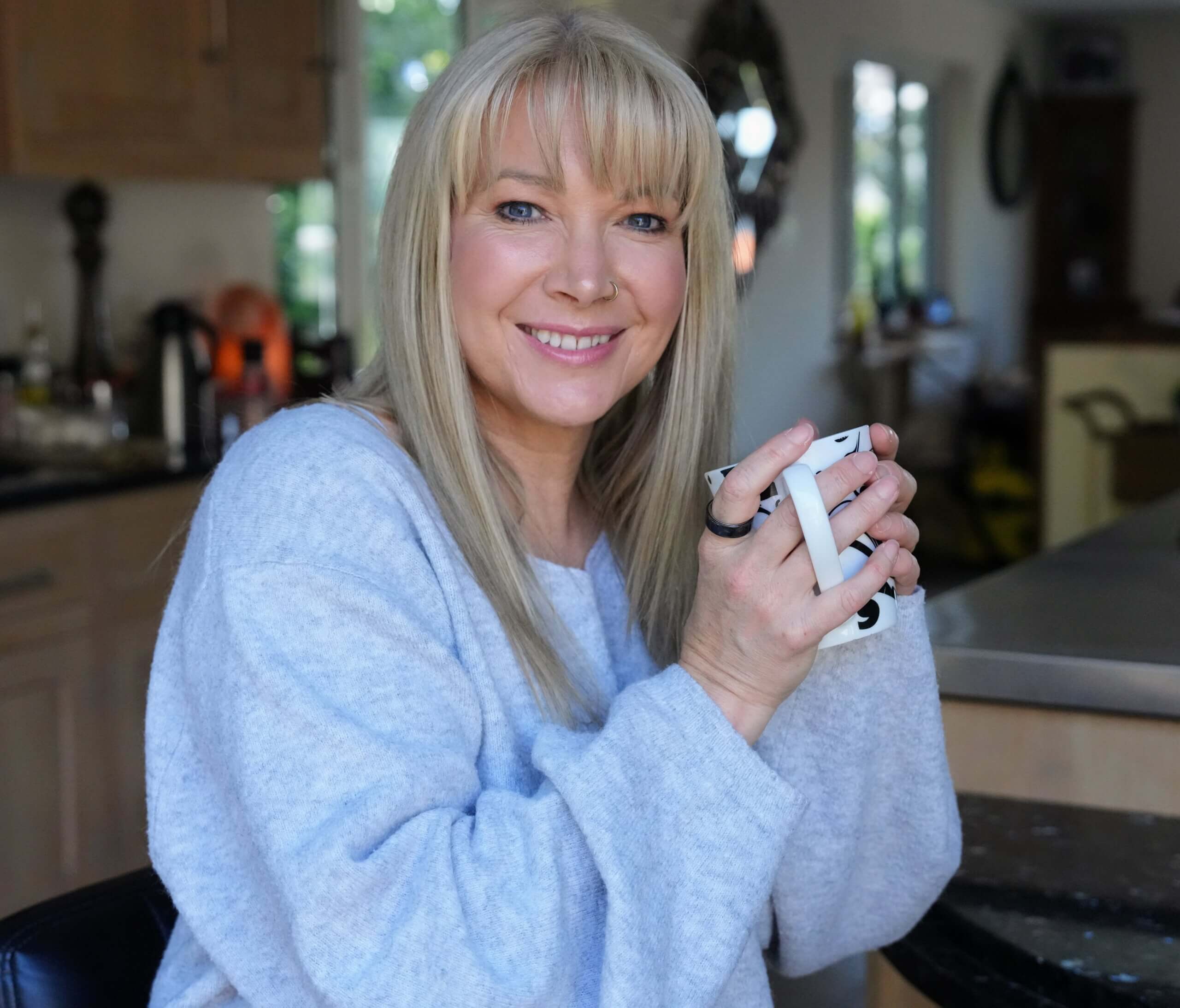
Becky Stone
This page was written by Becky Stone, an MBACP counsellor and qualified clinical supervisor based in Canterbury, Kent. Becky specialises in eating disorder recovery and works with adults, children and teenagers online across the UK and in person locally. She brings both clinical training and lived experience of disordered eating to her work, and created this page because she believes that anyone reaching out in a moment of crisis deserves to find clear, accurate help quickly, and to know that they are not alone. Enhanced DBS checked. If you’d like to work with Becky directly, her diary is open for a free 20-minute introductory chat.