UNDERSTANDING HOW EATING DISORDERS AFFECT FRIENDSHIPS
How Eating Disorders Affect Friendships
Why do eating disorders affect friendships?
Eating disorders often affect much more than food. They can make friendships feel overwhelming, family gatherings exhausting, and social situations impossible to face. Many people find themselves cancelling plans, avoiding meals with others, withdrawing from loved ones and believing they’re better off alone. In this article, I explore why eating disorders can quietly shrink your world, what is really happening beneath the surface, and how small, compassionate steps can help rebuild confidence, connection and recovery.
Eating disorders can affect friendships because anxiety, shame, low self-esteem and fear of being judged often make social situations feel overwhelming. Many people begin cancelling plans, avoiding meals with others and withdrawing from loved ones—not because they don’t care, but because the eating disorder convinces them that isolation feels safer. Recovery often begins by rebuilding connection through small, manageable steps.
The Emotional Impact of Eating Disorders
One of the Saddest Things I See
Over the last fifteen years of working with people experiencing eating disorders, one thing has become incredibly clear to me.
The presenting issue is not always the presenting issue.
Someone may tell me they do not feel like seeing friends anymore.
They may say they do not want to go out for dinner.
They may say they are happier staying at home.
They may tell everyone they are “just tired” or “busy” or “fine”.
From the outside, it can look as though they have stopped caring.
But once trust has been built, and someone finally feels safe enough to talk honestly, the story underneath is usually very different.
Most people have not stopped caring.
They have stopped feeling safe.
Unveiling the Real Issues
Before the Eating Disorder Took Hold
Eating disorders rarely steal someone’s friendships overnight.
They do it slowly.
Before the eating disorder became louder, many people describe themselves as outgoing, funny, social and full of life.
They laughed easily.
They made plans.
They enjoyed birthdays, coffee dates, family meals and spontaneous conversations.
They were more themselves.
Then something begins to change.
Confidence starts to disappear.
Anxiety increases.
Someone makes a comment.
A difficult experience knocks their self-esteem.
Or perhaps there is no single moment at all.
The eating disorder quietly begins convincing them that being around people is too much.
Before the Storm: A Glimpse of the Past
How Eating Disorders Quietly Shrink Your World
It often starts with one invitation.
“I’m busy.”
Then another.
“I don’t really feel like it.”
Then the birthday.
Then the family meal.
Then the coffee.
Then replying to messages feels overwhelming.
Eventually, people stop asking.
Not always because they do not care.
Often because they assume you are busy, need space or simply do not want to come.
The heartbreaking part is that many people desperately want connection.
They just do not know how to get back to it.
The Silent Retreat of the World
When the World Begins to Shrink
The Struggle to Maintain Connections
Why Friendships Become So Difficult
When somebody sends a simple message saying:
“Do you fancy coming out for dinner?”
Most people see one question.
Someone with an eating disorder may experience dozens.
Who else will be there?
What should I wear?
Will people notice my body?
Will they watch what I eat?
Will someone comment?
What if I panic?
What if it is too busy?
What if I cannot cope?
The anxiety becomes so overwhelming that saying no feels safer than saying yes.
Not because they do not care.
Because their nervous system is already working overtime.
It Is Not Really About Food
One thing I strongly believe is that eating disorders are rarely just about food.
They are about fear.
Shame.
Control.
Perfectionism.
Low self-esteem.
Feeling exposed.
Feeling judged.
Feeling as though everyone is looking at you.
When anxiety becomes overwhelming, it can genuinely feel as though the whole world is watching your every move.
The reality is usually very different.
Most people are busy worrying about their own lives.
They are not analysing you anywhere near as much as your anxiety tells you they are.
Why Saying 'No' Feels Safer Than Saying 'Yes'
How Eating Disorders Affect Friendships
Friendships often become one of the first casualties of an eating disorder.
People stop replying.
Plans get cancelled.
Messages stay unread.
Weeks become months.
The eating disorder then whispers:
“See. Nobody cares about you.”
But that is rarely the full truth.
People cannot read your mind.
If you do not tell them you are struggling, many will assume you need space rather than support.
That is where the eating disorder becomes clever.
It creates distance.
Then it uses that distance as evidence that you are alone.
The Emotional Pain Beneath the Eating Disorder
Eating Disorders Are Not Attention Seeking
One of the biggest myths I still hear is that eating disorders are attention seeking.
I do not believe that is true.
Having lived through my own eating disorder, I remember desperately wanting somebody to rescue me.
At the same time, I wanted everyone to leave me alone.
Being around people felt overwhelming.
That is the contradiction so many people experience.
You can be desperate for somebody to notice your pain, while also hiding from the very people who could support you.
That is not manipulation.
That is emotional survival.
The Impact on Friendships
Do Not Touch the Iron When It Is Hot
If you are supporting someone with an eating disorder, one piece of advice I often give is this:
Do not touch the iron when it is hot.
When emotions are running high, it is rarely the best time for difficult conversations.
Instead, keep things gentle.
Keep things achievable.
Do not start with a huge meal out, a full day trip or a big social event.
Start smaller.
Would you like to go for a short walk?
Would a quiet coffee feel manageable?
Do you fancy a drive?
Could we sit somewhere calm for ten minutes?
Small moments create connection.
Connection helps reduce loneliness.
And loneliness often gives the eating disorder more power.
Dispelling Myths About Eating Disorders
The Two-Hour Rule
One practical strategy I often share with clients is what I call the Two-Hour Rule.
If you are invited somewhere, do not tell yourself you have to stay all afternoon or all evening.
Tell yourself you will go for two hours.
If two hours feels too much, go for one.
If one hour feels too much, stay for thirty minutes.
Give yourself permission to leave.
Knowing you have an exit can reduce the anxiety enough to walk through the door.
Recovery is not about forcing yourself into situations that feel impossible.
It is about making small challenges feel possible.
Guidance for Supporters
Recovery Starts With One Percent
One thing I hope people remember from this article is this:
Work at one percent.
Recovery rarely happens through giant leaps.
It happens through tiny moments.
One reply.
One text.
One walk.
One coffee.
One conversation.
One small act of courage.
Little by little, those one percent moments begin rebuilding confidence.
Eventually, your world becomes bigger again.
You’re Not Alone in This Journey
Small Steps, Big Impact
Five Gentle Ways to Reconnect
If an eating disorder has made your world feel smaller, start gently.
Reply to one message instead of trying to catch up with everyone.
Arrange a short walk instead of a meal if eating feels overwhelming.
Use the Two-Hour Rule and give yourself permission to leave early.
Tell one trusted person that you have been finding things difficult.
Celebrate every one percent step, because recovery is built through consistency, not perfection.
Small does not mean pointless.
Small is often where recovery begins.
“Recovery doesn’t ask you to be fearless. It simply asks you to be one percent braver than yesterday.” Becky Stone
A Personal Message to You
If You Are Reading This Today
If you are sitting in your bedroom feeling like you have disappeared from your own life, please know this.
What you are feeling is not weakness.
It is not failure.
It does not mean you have become someone who does not care.
You have been surviving the best way you know how.
But you do not have to stay stuck there.
The first step does not have to be huge.
Perhaps it is replying to one message.
Perhaps it is sending a voice note.
Perhaps it is asking someone if they would like to go for a short walk.
Connection does not have to be perfect.
It just has to begin.
Embracing Courage in Recovery
Final Thoughts
Human beings are wired for connection.
We need purpose.
We need belonging.
We need relationships.
Eating disorders slowly convince us that being alone is safer.
Recovery gently reminds us that healing happens in relationships, with ourselves and with others.
It is easy to say no.
It takes courage to say yes.
But every time you choose one small step instead of another step backwards, you prove something to yourself.
You are stronger than the eating disorder wants you to believe.
And those tiny one percent moments?
They do not just rebuild friendships.
They help you find yourself again.
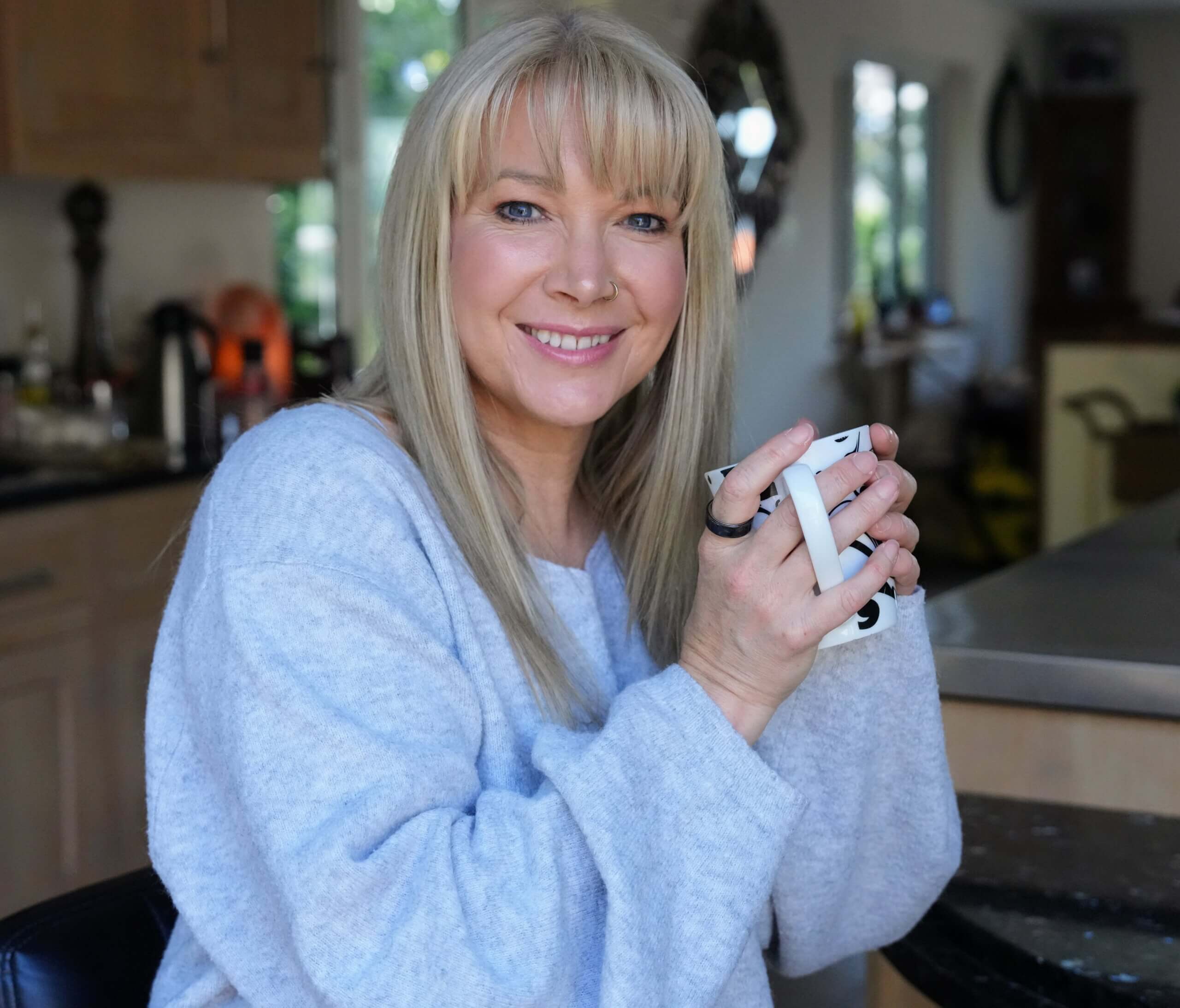
Becky Stone
Hi, I’m Becky Stone, founder of Counsellor Who Cares.
I’m a qualified counsellor based in Canterbury, specialising in trauma-informed eating disorder therapy for teenagers and adults. I support people experiencing anorexia, bulimia, binge eating, body image difficulties and disordered eating, both online across the UK and in person.
With over 15 years’ experience, I believe recovery is about much more than food. It’s about understanding the story behind the struggle, rebuilding confidence, strengthening relationships and helping people feel safe enough to be themselves again.
My approach is warm, compassionate and non-judgemental. I work at your pace, celebrating the small one percent steps that lead to lasting change.
If you’re ready to take that first step, I’d be honoured to support you.
Guidance for Supporters
You Do Not Have to Do This Alone
If you are struggling with an eating disorder, anxiety, body image concerns or finding yourself withdrawing from the people you love, you do not have to wait until things feel unbearable before reaching out.
I am Becky Stone, a qualified counsellor based in Canterbury, specialising in trauma-informed, neurodivergent-affirming eating disorder therapy for teenagers and adults.
Together, we can work at your pace to rebuild confidence, strengthen relationships and help you reconnect with the life that has been waiting for you.
Whether you are looking for face-to-face counselling in Canterbury or online therapy anywhere in the UK, support is available.
Becky Stone
Becky Stone is a qualified counsellor based in Canterbury, Kent, specialising in trauma-informed eating disorder therapy for teenagers and adults.
She works with clients experiencing anorexia, bulimia, binge eating disorder, body image concerns, anxiety and low self-esteem.
Offering both face-to-face counselling in Canterbury and online therapy throughout the UK, Becky’s compassionate, neurodivergent-affirming approach focuses on helping people move beyond symptom management towards genuine, sustainable recovery.
She believes healing rarely comes through perfection. Instead, it begins with small, consistent one-per-cent steps that rebuild confidence, connection and hope.