Bulimia Counselling in Canterbury, Kent
Looking for specialist bulimia counselling in Canterbury?
Becky Stone is an MBACP counsellor and NCFED-trained eating disorder specialist offering trauma-informed bulimia counselling for adults and teenagers in Canterbury, across Kent, and online throughout the UK. Support is tailored to your individual needs, helping you understand the emotional roots of bulimia and work towards lasting recovery.
Becky Stone specialises in supporting people with bulimia nervosa, binge eating disorder, anorexia, emotional eating and disordered eating, using a compassionate, trauma-informed approach.
NCFED-Trained Specialist
Online & Canterbury Sessions
Recovery at Your Pace
There are two kinds of first MESSAGES I receive
The first comes from someone who knows, without any doubt, that they need help. They’ve been living with bulimia for years. Sometimes decades. They’re exhausted, they’re frightened, and they’ve finally found the courage to reach out. That message often comes late at night.
The second is harder to put into words, but I recognise it immediately. It goes something like this: “I want to stop. But I don’t want to stop.”
That is one of the most honest things a person can say to me. And it tells me everything I need to know.
Because bulimia isn’t just a habit you can decide to break. It’s doing something for you. It’s become a way of managing feelings that feel unmanageable, a way of coping with life when there aren’t enough other tools in the toolkit. The part of you that wants to stop is real. And so is the part of you that isn’t sure yet. Both of those things can be true at the same time, and that’s exactly where we start.
You don’t have to have it all figured out before you get in touch. You don’t have to be ready. You just have to be here, reading this. That’s already something.
UNDERSTANDING BULIMIA
What's really keeping you stuck
When I work with people who are living with bulimia, shame is almost always at the centre of it. Not just the shame of the behaviours, the shame of keeping a secret that feels so enormous you’ve stopped being able to carry it on your own.
Bulimia is one of the most hidden eating disorders. It can look completely invisible from the outside. And part of what makes it so hard to stop is that, in some ways, it works. Not forever, and not without real cost, but in the moment, it does something. It releases something. It creates a feeling of control, or release, or emptiness that part of you has come to need.
What you’re actually trying to avoid isn’t food. It’s the feelings underneath. The anxiety, the overwhelm, the sense of not being enough, feelings that don’t always have a name, but that are very real. The cycle becomes a way of managing all of that. But it is an exhausting and isolating way to live. And over time, the shame of the cycle adds more weight to everything you’re already carrying. None of this makes you weak. It makes you someone who found a way to cope, and who deserves to find something better.
EATING DISORDERS DON’T HAVE A LOOK
You don't have to look a certain way to have bulimia
Eating disorders don’t have a look. They come in all different shapes and sizes. And one of the most damaging myths about bulimia is the idea that you have to be visibly unwell for your struggle to count, or that you have to have reached a certain level of crisis before you deserve support.
The majority of people I work with would not be identified as having an eating disorder by someone looking at them on the street. They go to work. They look after other people. They get through the day. And then they come home, and they are fighting a battle that nobody around them knows about.
You do not have to be at a certain weight, high or low. You do not have to be in hospital. You do not have to be at rock bottom. If bulimia is affecting your life, your relationship with food, your body, your sense of self, your ability to be present in your own life, that is enough. You are enough. And you are allowed to reach out.
TRAUMA-INFORMED THERAPY
What our sessions are actually about
When someone comes to me for bulimia counselling, the sessions are not, in the first instance, particularly about the bulimia. I know that might sound strange. But what I’m most interested in is you. Who you are. What your life looks like. What’s happened to you. What you’re carrying. The bulimia is often a chapter in a much longer story, and I want to understand the whole book.
I think of every person who works with me as exactly that, a book. When they first arrive, they tend to show me the opening chapter: the one that’s full of pain, or struggle, or something that feels completely unmanageable. But the first chapter being hard doesn’t mean the rest of the book can’t have happiness, and meaning, and moments that take your breath away. That’s true for you, even if it doesn’t feel that way right now.
Bulimia is often a symptom of something much deeper, a wound that hasn’t healed, a need that hasn’t been met, a feeling that was never allowed to exist. Until we understand what that is for you, we can’t begin to gently loosen its grip. And I mean gently. I’m not here to take away your coping mechanism before you have something to replace it with. That wouldn’t be therapy. That would be cruel.
We go at your pace. Always.
UNDERSTANDING YOUR STORY
RECOVERY IS POSSIBLE
Recovery isn't a straight line, and that's okay
One of the things I say very early on is this: there is no magic wand. I would never promise you there is, because it wouldn’t be true, and you deserve honesty more than you deserve false reassurance.
What recovery from bulimia tends to look like is a roller coaster. There are weeks that feel like real progress, and weeks that feel like you’ve gone backwards. Days when everything feels lighter, and days when the urge comes back with a force that frightens you. This is not failure. This is what recovery actually looks like in real life, and knowing that in advance makes those harder days slightly more survivable.
What changes, gradually, is your relationship with yourself. The self-criticism starts to soften. The shame starts to have less power. You begin to be able to sit with feelings that previously felt completely unbearable, not because they stop being difficult, but because you’ve built new tools, new trust, new capacity. You start to nourish yourself. Your soul as much as your body. That process takes time. And it is worth every single bit of it.
RECOVERY IS POSSIBLE
Your first conversation with me
Before anything else, I offer a free 20-minute consultation. No agenda, no pressure, no expectations. It’s simply a chance for us to get to know each other a little. For you to hear my voice, to ask me anything you’d like to ask, and to get a sense of whether you feel comfortable with me. Because that comfort matters more than anything else. You can have the most skilled counsellor in the world, and if you don’t feel safe with them, the work won’t happen.
When someone shares something they’ve kept hidden for years, sometimes their whole adult life ,with me, I’m always aware of the weight of it. Being trusted with what you’re carrying is something I take seriously and something I never take for granted. I’m going to hold it with care. I’m going to walk alongside you with as much attention and commitment as I have. That first call is just the beginning. But it might also be the moment something starts to shift, because you’ll have said it out loud to another person, and the world will still be standing. You will still be standing.
Your only job in that first call:
You don't need to have a speech prepared. You don't need to know exactly what you want to say. Just turn up. That's enough to start with.
HOPE FOR RECOVERY
What I wish people understood about bulimia
The first thing is how common it is. Far more people are living with bulimia than would ever say so, because the secrecy is built into the disorder itself. If you’re reading this and thinking “nobody else feels the way I do,” I promise you that is not true.
The second is this: you cannot just stop. People who haven’t experienced an eating disorder often assume it’s a question of willpower, that if you really wanted to, you could simply decide to do things differently. But bulimia doesn’t work like that. It doesn’t get fixed by reading a book, or by someone explaining the right technique in a training course. It’s not a knowledge problem.
What actually helps is being truly, deeply listened to. Not just heard, listened to. Bespokely and carefully, by someone who has trained specifically to understand what’s happening beneath the surface. Someone who is committed to understanding your particular version of it, and who won’t flinch at any part of your story.
Healing happens when the emotional wounds underneath finally get the attention and care they’ve been needing, possibly for years. That doesn’t happen overnight. But it does happen. I have watched it happen enough times to know that it is real.
She’d been working with me for a while. And one day she said: “The one thing you said to me is I didn’t have to stop.” She did stop, but it was her choice, in her own time, because the reasons had changed. Because she’d reached a place where she no longer needed it in the same way. That’s what healing looks like. Not willpower. Not discipline. A fundamental shift in what you need.
A MESSAGE OF HOPE
If you're reading this and you're not quite sure
That’s okay. That’s completely okay. Maybe you’re not sure you’re ready. Maybe you’re not sure what you’re living with is serious enough to warrant help.
Maybe you’ve tried things before, and they haven’t worked, and you’re not sure you have the energy to try again. All of those things make complete sense, and I hear them.
Here’s what I want you to know: I am ready, willing and able to support you, but only when you are. I don’t want to take your money if you’re not there yet. If you’re not ready right now, I respect that completely. Come back to this page when things shift. Save it. Bookmark it. Send it to yourself. And if you are ready, or if you think you might be getting there, the first step is just a conversation. Free, no commitment, no expectation. Just us talking.
Recovery doesn't have to be 100% today.
It just has to be 1% better than yesterday. That’s it. That’s the whole job.
1% could look like:
- Sending this page to someone you trust.
- Booking the free 20-minute call.
- Saying out loud, even just to yourself , that something needs to change.
- Being honest with your GP.
- Reading this page all the way to the end.
- Coming back to it tomorrow.
- Letting yourself believe, just for a moment, that things could be different.
Step by step. Day by day. That is enough.
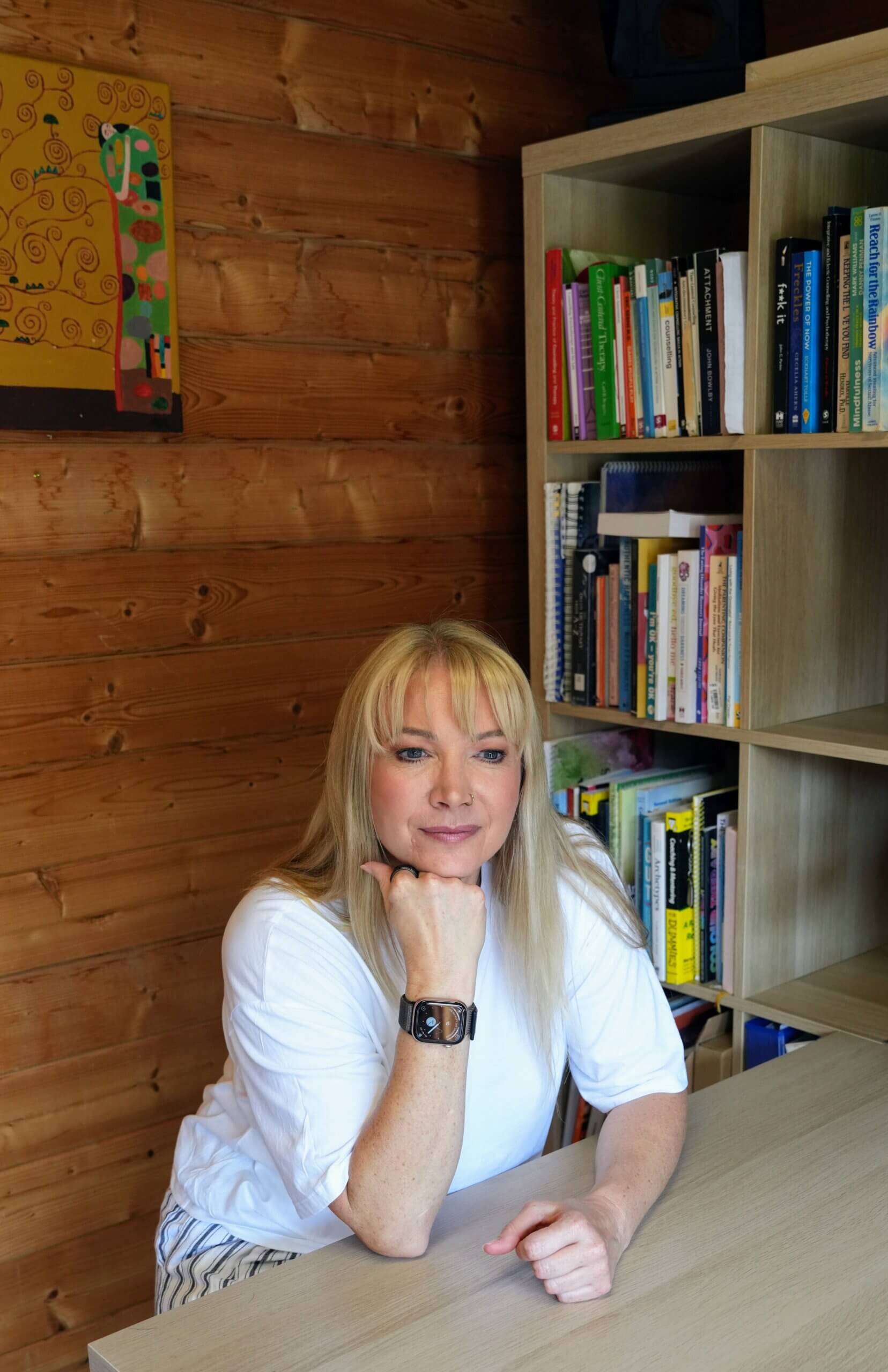
Becky Stone
Hi, I’m Becky, an eating disorder counsellor based in Canterbury, Kent, and the person behind Counsellor Who Cares.
I specialise in eating disorder counselling and trauma-informed therapy for adults, children and teenagers. I hold specialist training through the National Centre for Eating Disorders (NCFED), I’m an MBACP member and a qualified clinical supervisor. I offer sessions in person in Canterbury, online across the UK, and as walk-and-talk therapy.
What matters most to me is that you feel genuinely seen, not assessed, not judged, just heard. That’s where everything starts.
I offer a free 20-minute introductory consultation if you’d like to find out more.