Who Am I Without My Eating Disorder?
If that question frightens you, you are not alone. And the fact that you are asking it means something important.

This might be the most frightening question in eating disorder recovery. Not the food. Not the weight. Not the appointments or the meal plans or the things people around you want you to do. The question underneath all of it.
Who are you, when the eating disorder is not there?
If you have lived with an eating disorder for years, that question might feel impossible to answer. Because for a long time, the eating disorder has not just been something you have. In many ways, it has been someone you are. It has shaped how you spend your time, how you measure yourself, how you move through the world. Asking who you are without it is like asking someone to describe a room they have never been in.
This article is for two kinds of people. Those who have just made the decision to recover and are absolutely terrified of what that means. And those already in recovery who are finding that the identity piece is harder than they expected. Both of those places are real, and both of them are worth talking about honestly.
Why the Eating Disorder Becomes Your Identity
Why the Eating Disorder Feels Like Part of Who You Are
An eating disorder does not arrive in your life and sit quietly to one side. It moves in. It takes up space in how you organise your day, how you make decisions, how you judge yourself and measure your worth. It provides rules. Structure. A way of knowing exactly who you are and what you are doing at any given moment.
For many people, particularly those who developed an eating disorder in their teenage years, there is no clear memory of a version of themselves that existed before it. The illness was there during the exact years when identity is usually being formed. It shaped everything. In many cases, it became everything.
That is not a character flaw. It is not something you did wrong. The eating disorder filled a space that needed filling. It gave you something solid to hold onto at a time when other things felt uncertain or unsafe. Understanding that does not mean staying in it. But it does mean that recovery asks for something more than willpower. It asks you to build, often from scratch, a real sense of who you actually are.
The Fear of Not Being Seen
The Fear That Nobody Will Care About You If You Get Better
Here is something that does not get talked about honestly enough.
For many people, one of the deepest fears about recovery has nothing to do with food. It is the fear of becoming ordinary. Of not being special anymore. Of nobody noticing you, nobody checking on you, nobody asking if you are okay.
When you are unwell, you are seen. People worry. People call. People show up. There is a version of being cared for that arrives with being visibly struggling. And the idea of recovering, of being well, of just getting on with life like everyone else, can feel like disappearing entirely.
That fear makes complete sense. If the eating disorder has been the way your needs got met, and the way you felt visible and important to the people around you, then letting go of it can feel like letting go of your only way of mattering. Of being enough.
It is not true. But it feels true. And that feeling needs to be taken seriously, not dismissed, not reasoned away. It needs to be understood.
The Comfort Blanket
Why the Eating Disorder Is So Hard to Let Go Of
There is a reason people describe the eating disorder as something they are frightened to lose, even when they know what it is doing to them. It is familiar. It is predictable. In a life that can feel chaotic or uncertain or overwhelming, it has always been there.
It is, in many ways, a comfort blanket. A painful one. A damaging one. But a comfort blanket nonetheless.
The question worth asking is not “why can’t you just let go of it?” That question is neither helpful nor fair. The real question is: what is the eating disorder doing for you right now that nothing else is doing? What need is it meeting? What would need to be different for you to feel safe enough to put it down?
Those are not rhetorical questions. In the work I do with people recovering from eating disorders, they are the questions that unlock everything.
What It Looks Like When You Start to Find Yourself
Recovery does not announce itself with a dramatic moment. It tends to arrive quietly, in small things. Here are three that come up again and again.
Laughter
For many people, the first sign that something is genuinely shifting is laughing at something and actually meaning it. Not performing happiness for the people around them. Actually feeling it, even just briefly. That moment matters more than it might seem.
Energy
One of the quieter revelations in recovery is noticing that you have energy to do things. To go somewhere. To care about something outside of your own head. That energy is the beginning of finding out what you actually care about.
Connection
Coming out of your room. Saying yes to a friend. Sitting somewhere and being present rather than lost in your thoughts. These moments feel small. They are not small. They are the first threads of something real.
The Hardest Moment Nobody Prepares You For
There is a moment in recovery that almost nobody talks about. It tends to come when things are going well.
You are managing better. You have more energy. The people around you are relieved. They think you have done it. Part of you thinks you have done it.
And then, often out of nowhere, you feel the pull back.
Not because recovery was not working. Sometimes precisely because it was. Because the further you get from the eating disorder, the more real your life becomes, and that is wonderful and terrifying in equal measure. A version of you that is well, and thriving, and building something, is also a version of you with no comfort blanket left to fall back on.
This is the pivotal point. It is the most dangerous moment in recovery, and the one people are least likely to talk about, because they feel ashamed for feeling it. They have been told they are doing so well. They know how much the people around them want this to work. And here they are, wanting to go back.
If you are at this point right now, I want to say something clearly. The pull back to the illness is not a sign that you cannot do this. It is not a sign that recovery is not for you. It is a sign that you are doing it, and that it is real, and that part of you is frightened of how much.
A Question Worth Sitting With
Imagine yourself at eighty years old. Looking back over your life.
There are two versions of that moment.
In one, you spent years being pulled back to the illness. Frightened. Withdrawn. Letting it make choices for you that you wanted to make for yourself.
In the other, there was a point where you felt the pull and you fought through it. And on the other side, you built something. Not a perfect life. Just one that is genuinely yours.
What do you want to be looking back on?
What We Actually Do Together
When I work with someone on this question, we do not start with food. We start with you.
We look at what you value. Not what the eating disorder has told you to value. What you actually value, underneath all of it. What matters to you when you strip away the rules and the rituals and the fear. Sometimes people cannot answer that straight away, and that is completely fine. We find it together.
We experiment. We try things. We notice what brings even the smallest flicker of pleasure or curiosity or interest. We pay attention to what gives you energy and what takes it away. Over time, a picture forms. Not the person the eating disorder told you that you were, but the person you actually are. What you like. What you do not like. What kind of life you want to build.
We build confidence, not through grand declarations but through small, real evidence. Through noticing that you did something difficult and you are still here. That you tried something and something in you responded to it.
And when the pull back to the illness comes, as it sometimes does, we work out together what it is trying to tell you at that moment. What need it is responding to. And we make a plan for how to meet that need in a way that does not cost you your future.
This work is not quick. But it is real. And everything you discover in it belongs to you.
If the Eating Disorder Is Calling You Back
If you are at that pivot point, or approaching it, I want to be honest with you.
Being pulled back does not mean you have failed. It does not mean recovery is not possible for you. It means you are human, and the illness has been with you for a long time, and letting go of something that has met your needs, even in painful ways, is genuinely hard.
The most useful question at this point is not “why am I so weak?” It is “what is happening for me right now that is making this feel so necessary? What is the eating disorder offering me that I cannot find anywhere else right now?”
If you want to explore that question with someone who understands what it means, I am here.
frequently asked questions
Is it normal to miss my eating disorder even when I know it was harming me?
Yes. Completely. The eating disorder met real needs, even if it did so in harmful ways. Grief for it is a normal part of recovery, not a sign that something is wrong with you or that you are not ready to get better.
I have had an eating disorder since I was a teenager. I do not know who I am without it. Is it too late to find out?
No. This is one of the most common situations I work with. When the eating disorder has been there during the years identity usually forms, there is no clear version of yourself to return to. The work is not about going back. It is about discovering who you are, perhaps for the first time. That is possible, and you do not have to do it alone.
I am scared that without my eating disorder I will be ordinary and nobody will care about me. Is that a normal thing to feel?
It is one of the most common fears I hear. The eating disorder may have been the way you felt visible, special and important to people around you. That need to be seen and cared for is completely valid. The work is about finding ways to meet that need that do not cost you your health or your life.
Does therapy actually help with identity, not just eating?
Yes, and in my experience, it has to. Changing your relationship with food matters. But understanding who you are, what you value and what kind of life you want to build is what makes that change last. That is central to the work I do.
I feel like I am not sick enough to deserve support. Is that true?
No. That feeling is very common and it is not an accurate measure of anything. You do not have to be at your worst to deserve help. If this is affecting your life, your relationships and your sense of who you are, that is enough.
How long does this kind of work take?
There is no single answer. Some people notice the first threads of themselves quite quickly, through small moments of joy or connection. The deeper identity work takes longer and looks different for everyone. What I can tell you is that every step forward is yours to keep.
You Do Not Have to Figure This Out Alone
If the question of who you are without your eating disorder is something you are carrying right now, I would like to help you find the answer. Not by telling you who to be, but by working alongside you as you discover it for yourself. I offer counselling for eating disorders and disordered eating from my practice in Canterbury, Kent, with sessions available in person and online.
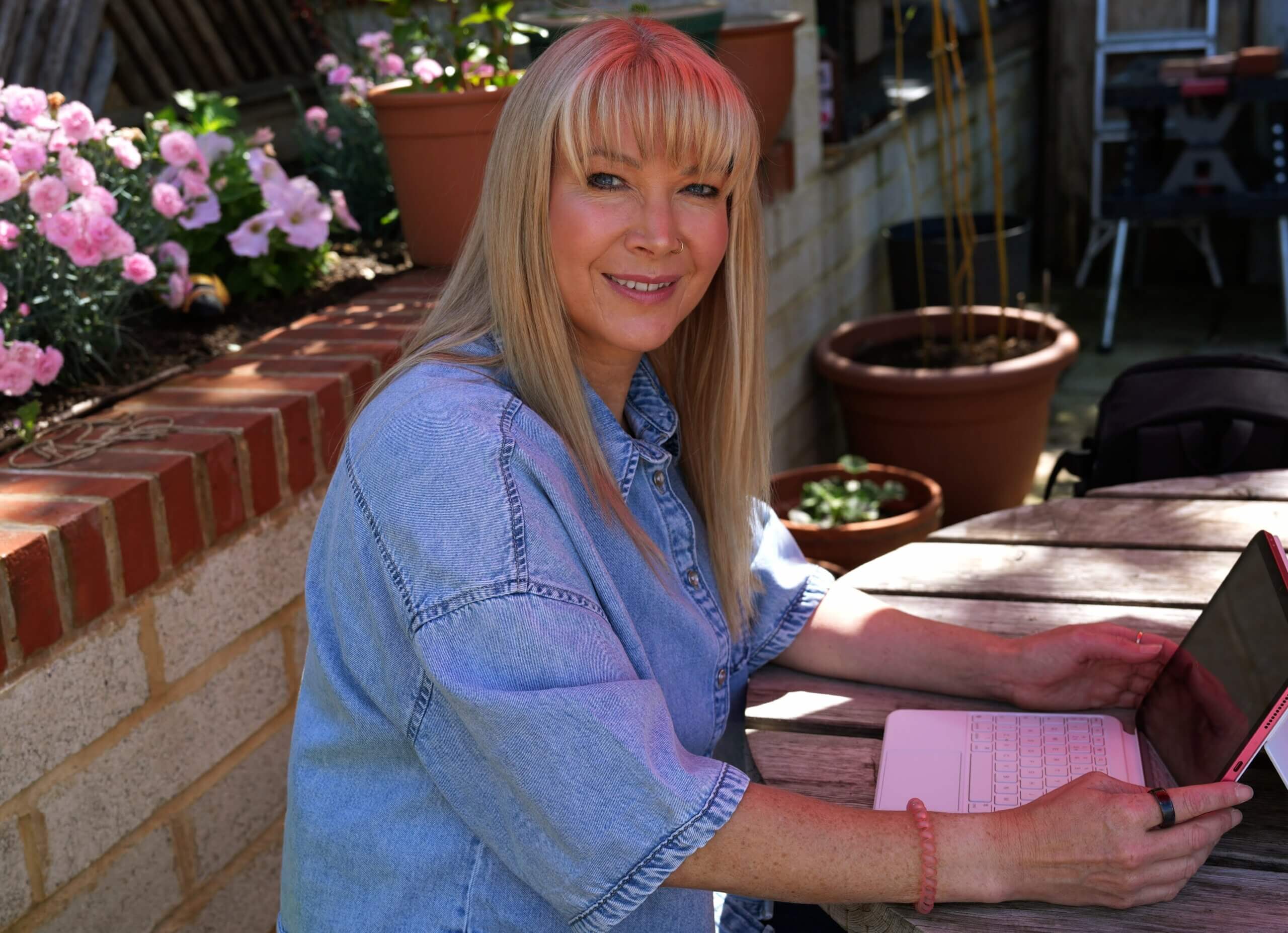
About Becky Stone
Becky Stone is a specialist eating disorder counsellor based in Canterbury, Kent, with over 15 years of experience supporting adults and young people experiencing anorexia, bulimia, binge eating disorder and disordered eating. She completed advanced Master Practitioner training in eating disorders through the National Centre for Eating Disorders (NCFED) and is a Clinical Supervisor and registered member of the BACP.
Becky’s approach is warm, honest and non-judgmental. She believes recovery is about far more than changing your relationship with food. Together, you will explore the anxiety, perfectionism, body image difficulties, identity questions and emotional patterns that so often sit beneath an eating disorder.
She has supported people at every stage of recovery, including those navigating the identity work that can feel like the hardest part of all. Rather than offering quick fixes, Becky works alongside each person to help them build a life that feels meaningful, authentic and genuinely their own.